Bubblan
Designing for the one I couldn't reach.
Summary
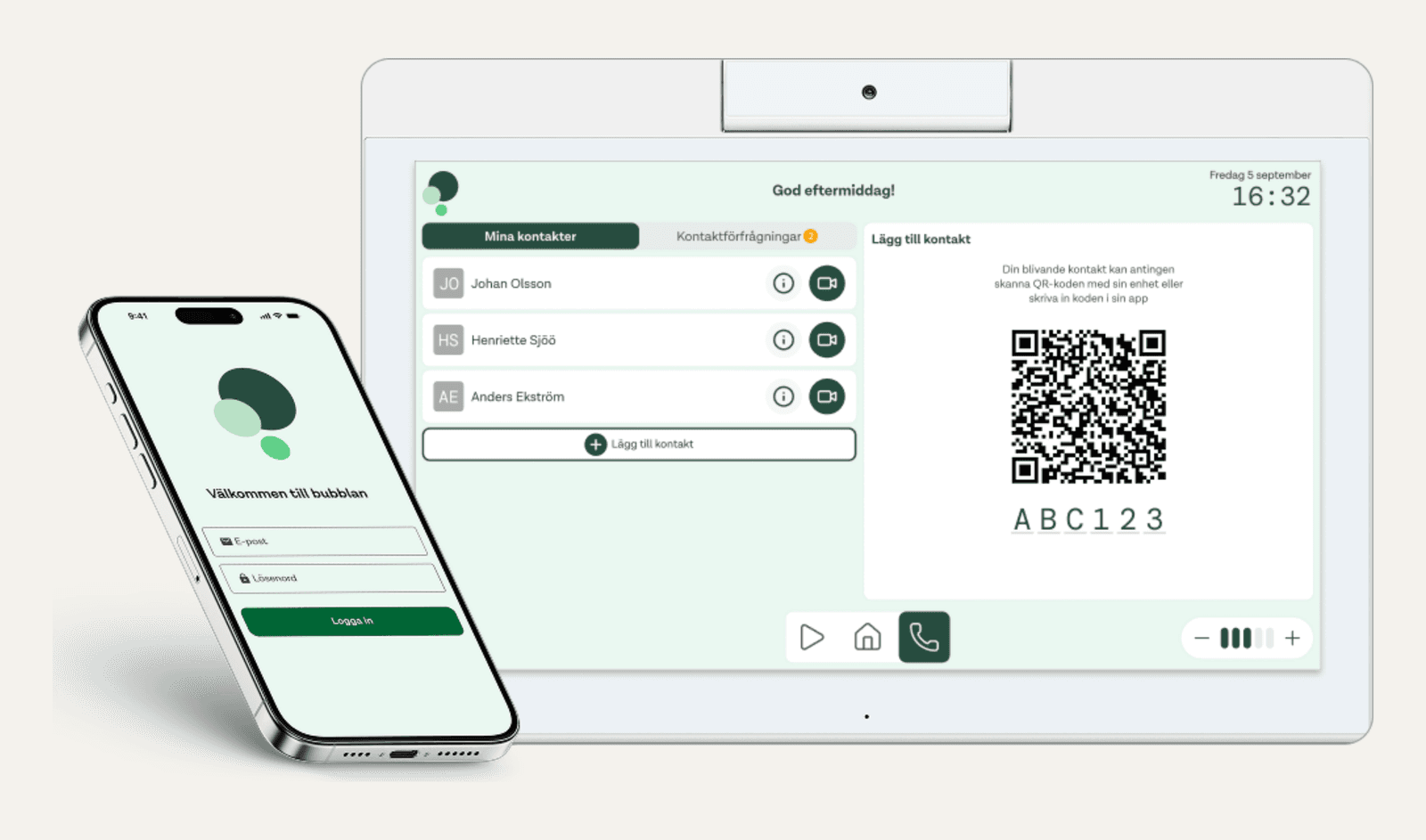
Bubblan is a communication hub Sensapp places in elderly care recipients' homes for digital check-ins, group calls, and video calls. I modernized the existing interface and took over wireframes for the new companion app, without being able to interview Bubblan's primary users directly. I grounded design decisions instead in WCAG and senior-design research, indirect feedback via a municipal contact, and collected experience from Sensapp and a prior internship. The work became the core of my thesis on user-centered design without direct user access.
The challenge
Bubblan already existed in the field when I started my internship, but with an older interface, and the companion app, internally called Bubblan Circle, was still an early concept with wireframes from one of the developers. My brief was two-part: modernize Bubblan's interface to be clearer, more accessible, and WCAG-checked without losing what existing users were used to, and take the companion app forward from a UX perspective with my own reasoning behind every change.
The real difficulty was who the user was. Bubblan's primary users are elderly, often with limited digital experience, scattered across municipalities nationwide, for most of them arranging a digital interview simply wasn't practical. The question became how to sustain a user-centered process when direct contact with the user is missing.
Designing without user contact
Without access to end users, I built my process on three pillars instead of classic interviews. The first was established guidelines: WCAG, Nielsen Norman Group's research on older adults and digital interfaces, and a systematic review in JMIR mHealth and uHealth based on 40 studies on app design for users over 60.
The second was feedback by proxy: a technical lead and coordinator in Vingåkers kommun continuously relayed what they heard and saw from Bubblan users through their weekly contact with Sensapp's developers. The third was collected experience from colleagues at Sensapp and my earlier internship at partner company Digalog, which works with the same target group.
What the feedback showed
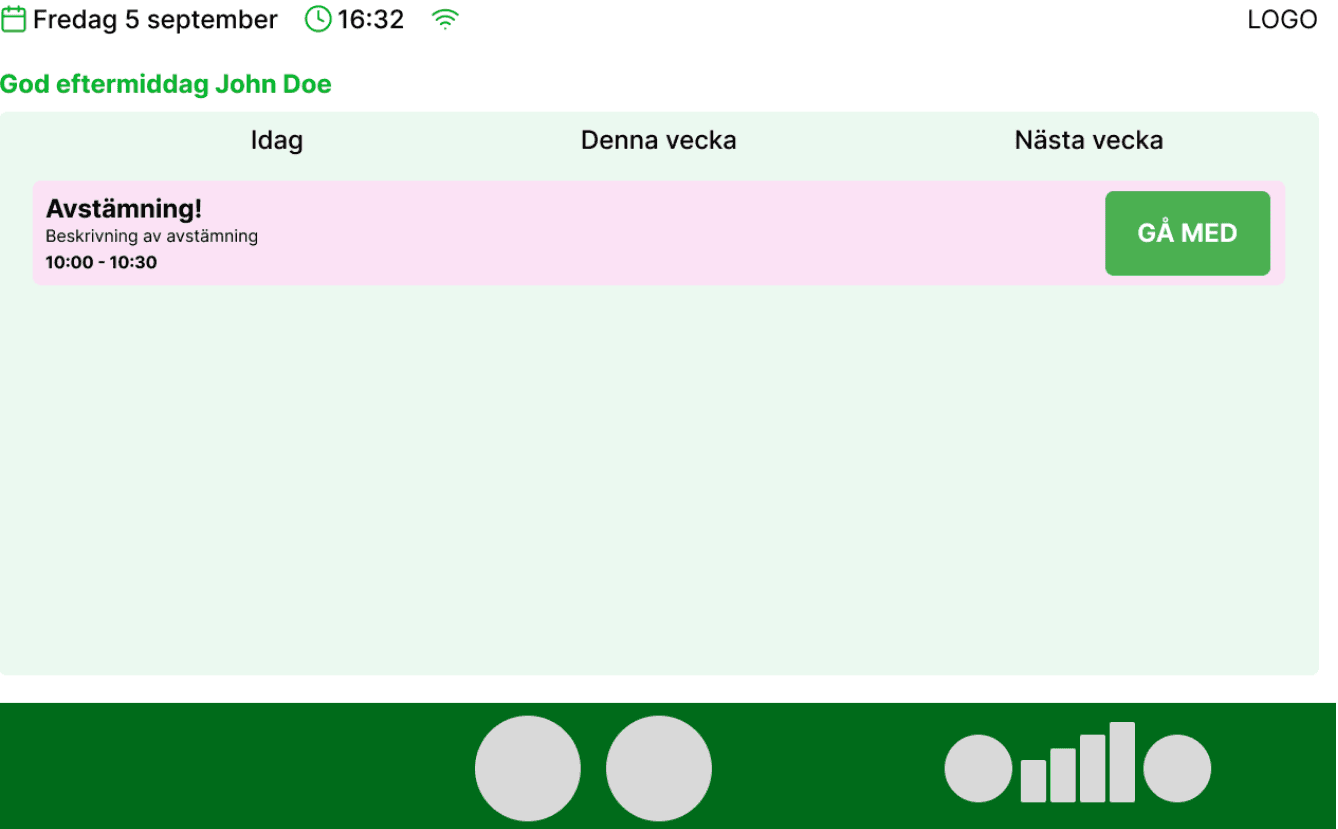
The feedback was concrete rather than abstract: the text on some buttons was hard to read, and the contrast of buttons against the green background felt too low. I could verify the signal objectively, measurements showed the original primary color failed WCAG's contrast requirements.
Insight
Observation
Bubblan's original bright-green primary color gave insufficient contrast on buttons with white text, confirmed both by WCAG measurements and by proxy feedback from Vingåker.
Why it mattered
Bubblan's users often have reduced vision, and senior-design research identifies high contrast as one of the most important factors for readability in this age group.
Design implication
I replaced the primary color with a new shade that meets WCAG's AAA contrast level, the highest tier, while keeping the brand identity intact.
Design decisions and reasoning
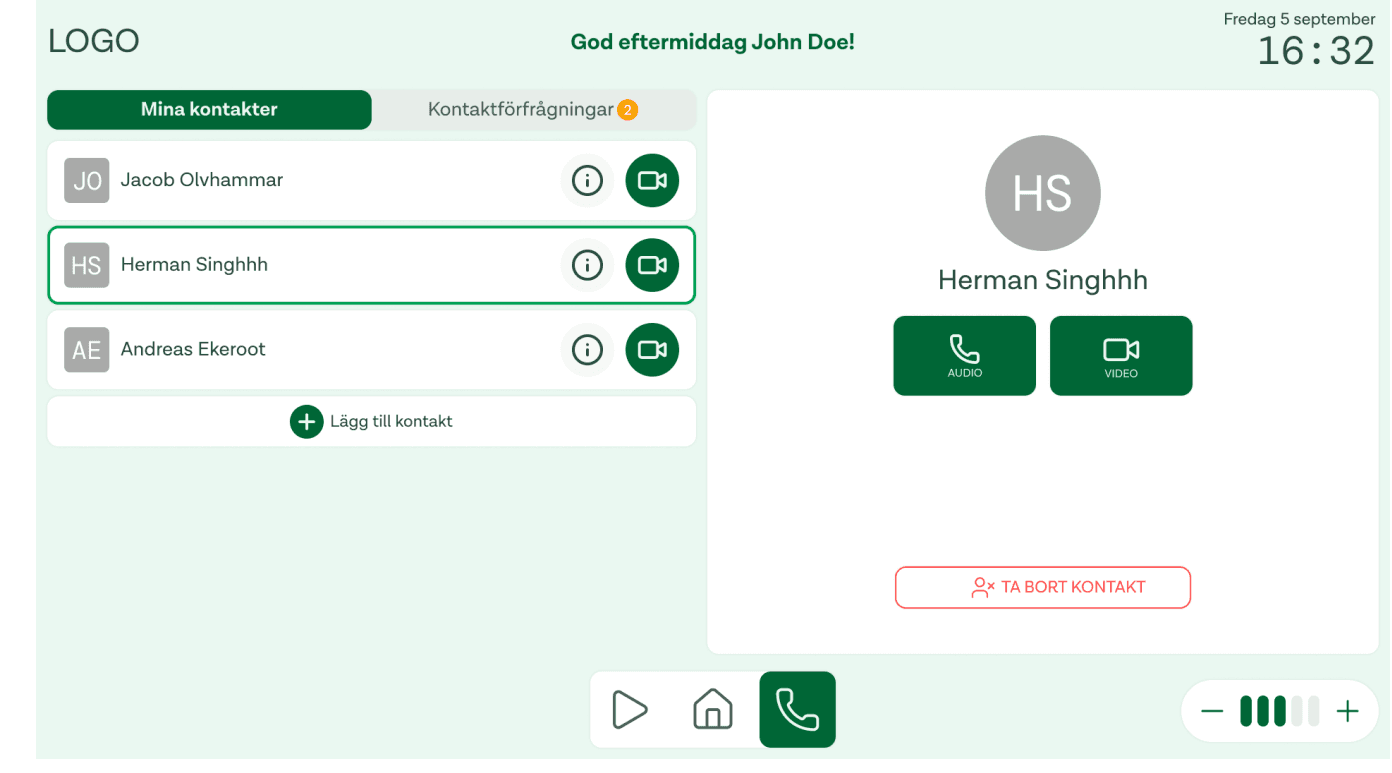
Beyond the color change, I held to two more of the systematic review's "golden rules" for older users: larger buttons and spacing between interactive elements to compensate for reduced motor control, even where it made the layout sparser than a modern trend might suggest. I kept icons to a minimum and paired them with text, since a symbol's meaning isn't always obvious to users with less digital experience.
The companion app operated under different conditions: its audience is generally younger and middle-aged, experienced mobile users, so I could lean on general consumer-app best practices, dropdowns and toggles weren't something to avoid here, while I justified the UX changes against the wireframes I inherited.
Designing the experience
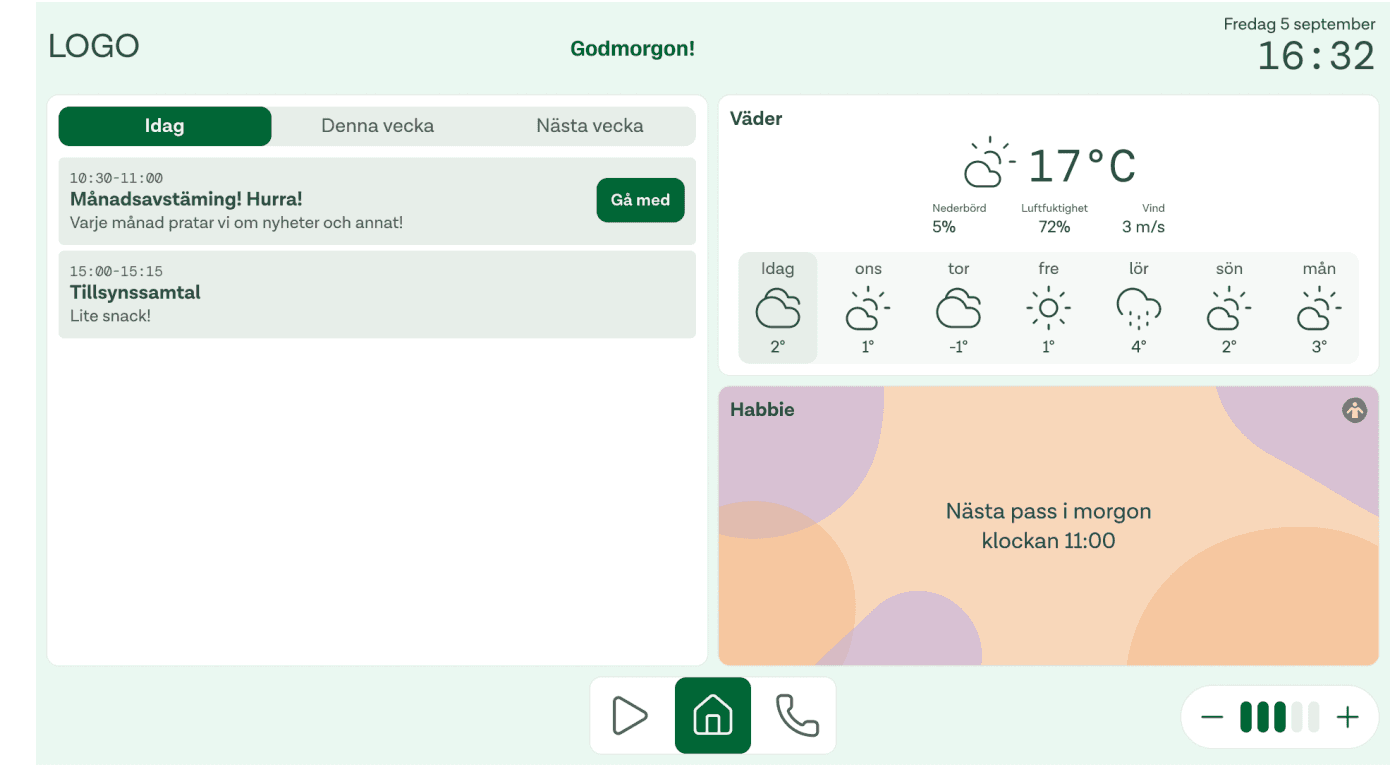
Because Sensapp trusted my reasoning, the updated interface was implemented smoothly even though changes like the color swap happened early in the internship. I carried the companion app's design forward from the existing wireframes with clear UX reasoning behind every change, building a complete flow for schedule, weather, and video calls.
Final experience
The new interface brings today's and this week's schedule, a weather widget, and the next scheduled call together on one home screen, with the new AAA-contrast color applied throughout. The contacts and video-call view follows the same principles: large, text-labeled controls with generous spacing between them.
Outcome
The new primary color now meets WCAG's AAA level and is implemented in production. The concrete problems reported, small text, low contrast, were addressed and could be verified objectively against WCAG. What I couldn't verify is how the changes are actually experienced by end users, since almost all the feedback I received concerned measurable accessibility rather than experience.
Reflection
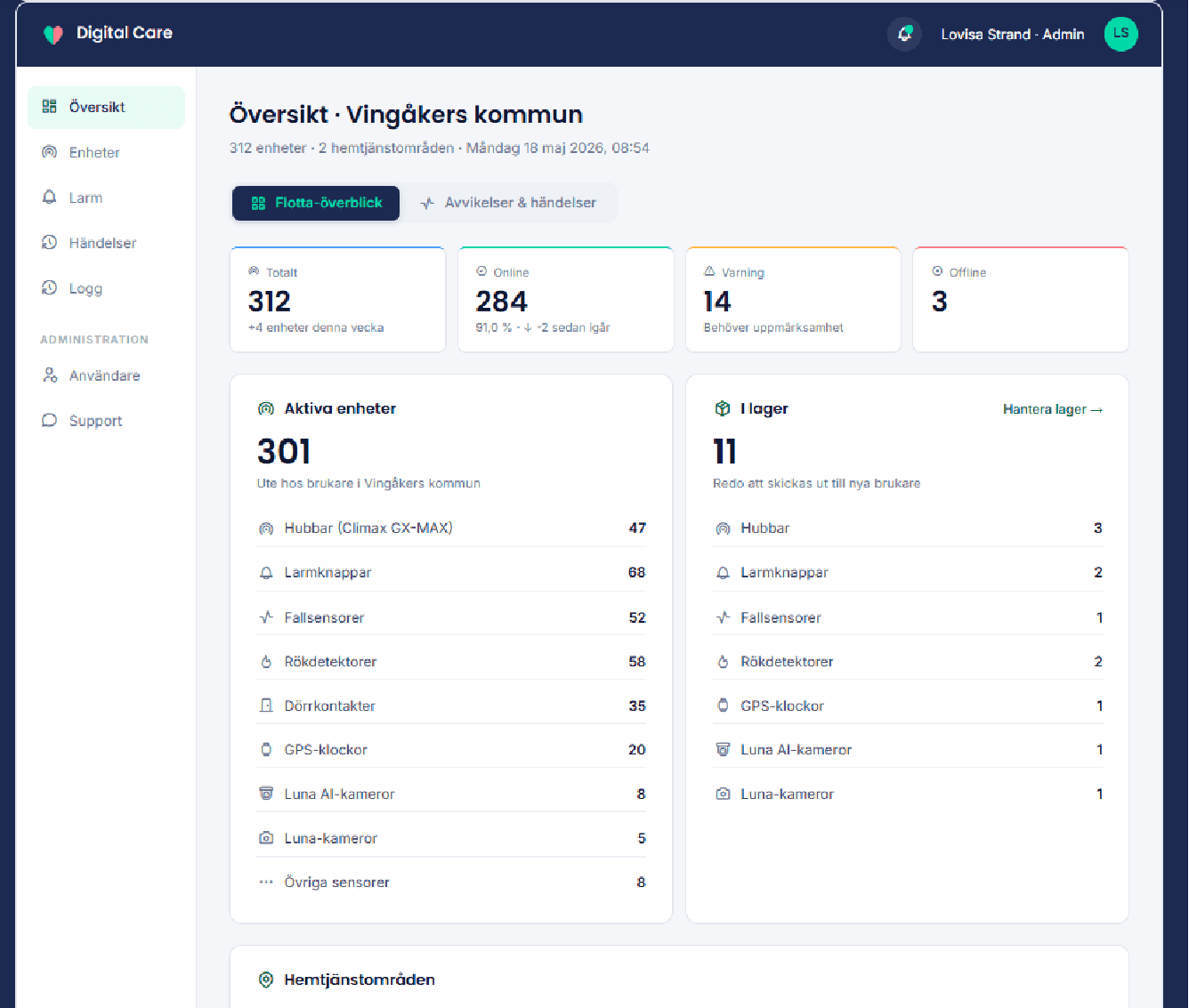
Comparing Bubblan with Digital Care became the foundation of my thesis: user-centeredness isn't binary but a spectrum, and where you land on it depends on the conditions you work under. Bubblan isn't less user-centered than a project with direct interviews, it's user-centered with different tools and clearer limits on what the method can deliver.
In hindsight, I would have wanted to add a structured field observation, visiting a municipality to see staff and elderly residents use Bubblan together would have given a kind of insight that proxy feedback can't replace. I also carry forward an experience near the end of the internship: at a social gathering for the municipality's seniors in Vingåker, I met actual Bubblan users for the first time, and realized that the people who attend such events are rarely the most isolated, who are often the ones who need the product the most.